| |
| Tuesday, 17 November 2026 |
| The Arts and Crafts of Kashmir |
| Zara Fleming |
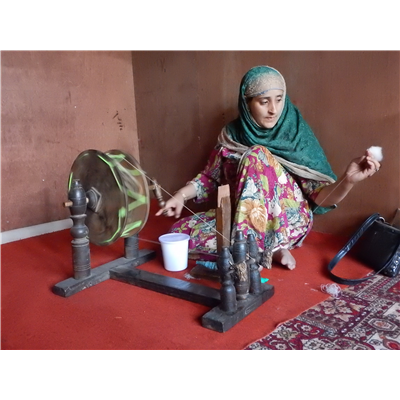 |
For many people, Kashmir conjures up a beautiful valley surrounded by the snow-capped peaks of the Himalayas, for others it is a land of conflict. But what is less well known is that it has been of historic artistic importance for nearly 2000 years. This lecture introduces the astonishing diversity of arts and crafts produced in this tiny area, influenced by Buddhist, Hindu and Islamic cultures. It explores Buddhist sculptures, Hindu temples, great Islamic gardens, paintings, calligraphy, Moghul carpets and Kashmir shawls. Despite its troubled history, Kashmir has fostered a unique environment of artistic diversity and religious co-existence. |
|
| Tuesday, 15 December 2026 |
| Dickens and Christmas: Dickens was the first novelist to use the words "Merry Christmas" |
| Jane Tapley |
 |
A Christmas version of his life and times. Dickens was often referred to as Jolly Old Christmas because of his highly popular short stories especially written for the festive season. He was also the first novelist to use the words Merry Christmas thus starting a trend that is still popular today. |
|
| Tuesday, 19 January 2027 |
| The Art of State Ceremonial Music |
| Graham Jones |
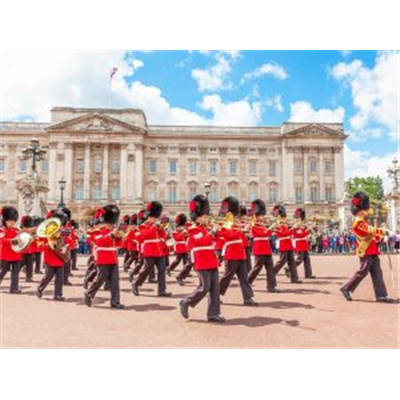 |
The UK provides some of the biggest Ceremonial Events in the world and arguably the best in the world but why is that? How do the military prepare for major events such as State Opening of Parliament, State Visits, National day of Remembrance, Royal Weddings or even a State Funeral? |
|
| Tuesday, 16 February 2027 |
| The Unknown Churchill - Winston Churchill and Blenheim Palace |
| Antonia Keaney |
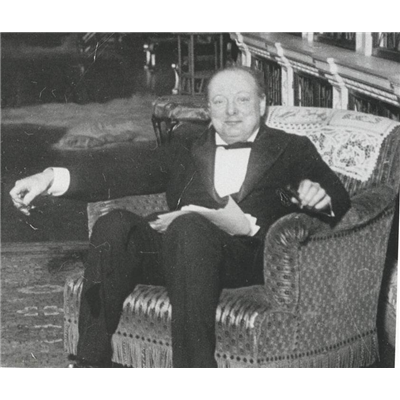 |
Winston Leonard Spencer-Churchill was unexpectedly born at Blenheim Palace over 150 years ago. This lecture draws upon the private resources of Blenheim and adds new and refreshing insights into this remarkable man - and his special relationship with his ancestral home. We examine the breadth of talent, achievement and personality of our 'Greatest Briton': soldier, politician, statesman, painter, writer, orator, family man - and bricklayer! |
|
| Tuesday, 16 March 2027 |
| Precious Imperfections: Ceramics with Rivets and Gold |
| Anne Haworth |
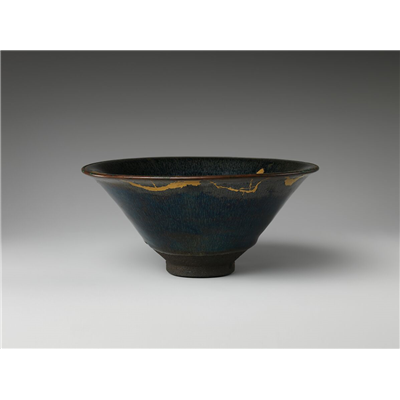 |
Ceramics are hard, lustrous and useful, sometimes rare, costly and beautiful. They are fragile and disasters can strike in unexpected ways: as a trembling hand wields a duster in the drawing room of a grand country house; as a delicious dessert is prepared in the confectionery kitchen of an Ottoman Palace; or when a revered bowl which has passed through generations of owners falls to the floor during the Japanese tea ceremony. We can sympathise with the tears of a tired English housemaid when a matching set of treasured plates was reduced from six to five! Yet help for her was at hand in the form of skilled porcelain menders who, in the make-do-and-mend spirit of past eras repaired the damages with tiny metal rivets. In Japan, gold lacquer repairs are called kintsugi. When revitalised with intricate repairs and their unique histories of cracks and chips are outlined in gold, these tea ceramics connect with a philosophy known as wabi-sabi in which beauty can be found in the imperfect and incomplete. In contrast, Imperial China witnessed the deliberate smashing and burial of porcelain wares which emerged flawed from the kilns so they could not be seen by the emperors. We explore why some people in 17th century Spain ate fragments of broken pottery! The lecture includes my original photographs taken in China, Japan and Istanbul. |
|
| Tuesday, 20 April 2027 |
| Balenciaga, Dior & Fath: Haute Couture's Holy Trinity
|
| Scott Schiavone |
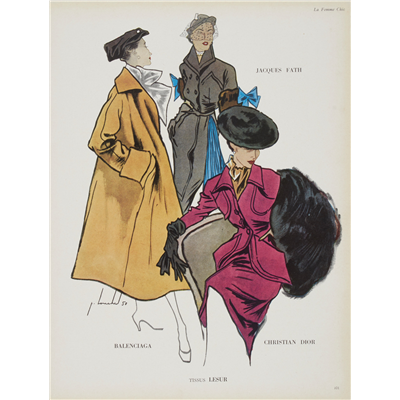 |
Haute Couture is an art form, inseparable from fashion, that achieved some of its finest moments during the years following World War II. During this period, Paris reaffirmed its position as the Capital of Fashion and its reputation for producing the most luxurious and creative clothes money could buy. Three names became synonymous with luxury, glamour and elegance during haute couture's most exclusive and fertile period - Christian Dior, Cristóbal Balenciaga and Jacques Fath. Undisputed masters of mid 20th century haute couture, Cristóbal Balenciaga was the father of Contemporary fashion, Christian Dior redefined post-war fashion in 1947 with his ‘New Look’ and Jacques Fath, now relatively unknown, was an innovator known for dressing "the chic young Parisienne". This lecture explores the life and creative output of three designers during the period widely considered as the zenith of French haute couture. |
|
| Tuesday, 18 May 2027 |
| T B A |
|
 |
|
|
| Tuesday, 22 June 2027 |
| The Brilliance of Brunel - the man who built the modern world |
| Ian Swankie |
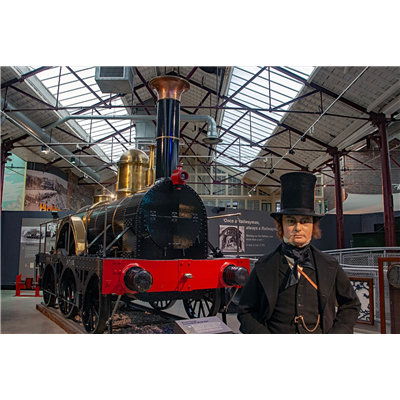 |
We are still living amongst the infrastructure created by Isambard Kingdom Brunel in the 19th century. He changed the face of the English landscape with his ground-breaking projects including railways, bridges, tunnels, ships, and grand buildings such as the magnificent Paddington Station. He merged art with engineering and science and was a pioneer and a revolutionary. And he was brilliant. We'll look at the man, his background, his work, and his legacy. |
|